
WELCOME BONUS 300%
UP TO €2000 + 100
FREE SPINS
UP TO €2000 + 100
FREE SPINS
Home → Blackjack
Blackjack at 7k Casino: Variants, Rules and Payouts
Chose Wrong Table for 5 EUR Bankroll
For players with a 5 EUR bankroll, selecting the correct table is crucial. The Blackjack Party table from Evolution accepts bets from 1.00 EUR up to 1,000 EUR, offering a wide range for many players. However, other tables present higher minimums that could quickly deplete a small bankroll if not managed carefully.
The Quantum Blackjack Plus Live by Playtech has a minimum bet of 1 EUR, which is accessible. However, the Infinite Blackjack by Evolution starts at 1 EUR and goes up to 5,000 EUR, making it suitable for a broad spectrum of players. A 5 EUR bankroll would be significantly impacted by the house edge over time.
When considering a 5 EUR bankroll, focusing on tables with lower minimum bets is essential. The Blackjack Party, for instance, allows for a greater number of decisions with a smaller amount, unlike tables with higher entry points. Careful selection prevents rapid depletion of funds due to the inherent house advantage.
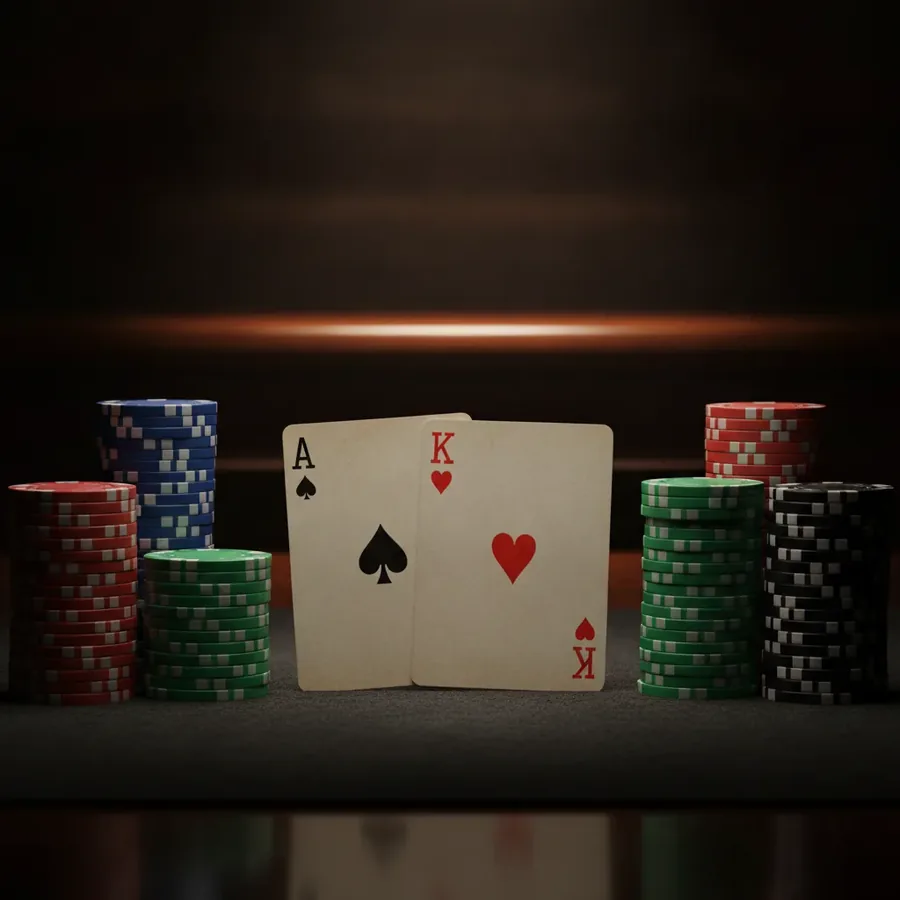
How many decks are in the shoe?
The number of decks in a blackjack shoe directly impacts the house edge. A game with a single deck, such as Blackjack Ein Deck, klassische Regeln, offers an RTP of 99.85% and a house advantage of 0.15%, which is very favorable. This is significantly lower than games using multiple decks.
Games using 6 decks can also offer competitive odds, like the Blackjack 6 Decks, S17, DAS, DOA variant with an RTP of 99.54% and a house advantage of 0.46%. In contrast, Blackjack Insurance, when played with 6-8 decks, carries a substantial house advantage of 7.47%, making it a less favorable side bet.
A common configuration for online blackjack involves 6 or 8 decks, as seen in the Blackjack Insurance (6–8 Decks) scenario. This typically results in a higher house edge compared to single-deck variations. For example, a shift from 8 decks to 6 decks might reduce the house edge by approximately 0.02 percentage points.
What Peek Means with a Dealer Ace
When a dealer reveals an Ace, a common practice in blackjack is the 'peek'. This refers to the dealer checking their hole card to see if they have blackjack before any player acts. This procedure is standard in many blackjack variants to prevent players from making incorrect decisions based on a known dealer blackjack.
The Blackjack Insurance side bet is directly related to the dealer showing an Ace. This insurance bet pays 2:1, but with a significant house advantage of 7.47% in a 6-8 deck game, it is generally advised against by basic strategy unless specific card counting conditions are met. The RTP for this side bet is 92.53%.
In situations where the dealer has an Ace, understanding the 'peek' is vital. If the dealer has blackjack, hands that did not achieve blackjack themselves would lose their initial stake. This is why the insurance bet is offered, though its high house edge makes it a risky proposition for the average player.
Double Down vs Simple Hit on 11
Doubling down on a hand total of 11 is a strategic move that can significantly improve a player's outcome. In Blackjack Liberal Vegas Strip, which features liberal rules and a 3:2 payout, doubling down is a key component of its favorable 0.28% house advantage. This variant allows doubling down after splitting (DAS).
The Blackjack 6 Decks, S17, DAS, DOA variant, with a 3:2 payout, allows doubling on any two cards. This includes doubling down on an 11. The RTP for this game is 99.54%, with a house advantage of 0.46%, and it assumes players follow basic strategy, which strongly recommends doubling on 11.
Compared to a simple hit, doubling down on 11 offers a superior expectation. The Blackjack Split / Double / H17 variant highlights the positive effect of DAS (Double After Split), which improves RTP by approximately 0.14 percentage points. This suggests that maximizing doubling opportunities, especially on an 11, is beneficial.
How much time is left for the decision?
The time allocated for player decisions varies significantly across live blackjack tables. Blackjack Party from Evolution, for instance, aims for a lively atmosphere with two hosts, implying a dynamic pace. While specific time limits are not detailed for this game, the emphasis on 'party' suggests prompt decisions are encouraged.
Infinite Blackjack by Evolution offers unlimited seats, which can sometimes lead to longer decision times if players are hesitant. However, the game also includes multiple side bets like Any Pair and 21+3, which might require players to make additional choices within a set timeframe. The RTP for this game is 99.47%.
Quantum Blackjack Plus Live by Playtech introduces Quantum Multipliers up to 1,000x on specific 21-point combinations. This exciting feature, alongside the standard gameplay, means players must make their decisions promptly to potentially benefit from these multipliers. The RTP for this variant is 99.57% with optimal strategy.
Blackjack variants at a glance
| Variant | Payout | House edge | Rule | Bet range |
|---|---|---|---|---|
| Blackjack 6 Decks, S17, DAS, DOA, Auszahlung 3:2, Basisstrategie | 99.54% | 0.46% | Dealer steht auf Soft 17; Verdopplung auf jeder Zweierkarte; Verdopplung nach Split erlaubt; keine Aufgabe. Basisstrategie ist für diesen Wert zwingend | Blackjack 3:2, normaler Gewinn 1:1, Insurance 2:1 |
| Blackjack Liberal Vegas Strip (liberale Regeln, 3:2) | 99.72% | 0.28% | Günstigste Regelkombination: S17 + DAS + Resplit + Late Surrender. Standardabweichung 1,15 | Blackjack 3:2, Gewinn 1:1 |
| Blackjack Auszahlung 6:5 statt 3:2 (6 Decks) | 98.15% | 1.85% | Ersatz von 3:2 durch 6:5 fügt exakt +1.39 Prozentpunkte zum Vorteil des Casinos hinzu – stärker als jede andere Regeländerung. Bei $10 Einsatz zahlt Blackjack $12 statt $15. | Blackjack 6:5, Gewinn 1:1 |
| Blackjack Ein Deck, klassische Regeln, 3:2 | 99.85% | 0.15% | Weniger Decks = niedrigerer Vorteil; ein Deck gibt ca. −0.48 Prozentpunkte gegenüber 8 Decks. Oft durch 6:5 Auszahlung kompensiert. | Blackjack 3:2, Gewinn 1:1 |
| Blackjack Insurance / Versicherung (6–8 Decks) | 92.53% | 7.47% | Separate Nebenwette bis 50% der Hauptwette, wenn der Dealer ein Ass hat. Basisstrategie schreibt IMMER Ablehnung vor (außer Karten zählen bei True Count ≥ +3). Bei einem Deck Vorteil ≈ 5.88% | Insurance 2:1 |
| Blackjack Split / Double / H17 – Regel-Effekte | n.a. (Regel-Modifikatoren) | H17 +0.22 Prozentpunkte; RSA −0.08 Prozentpunkte; DAS −0.14 Prozentpunkte | Dealer Hits Soft 17 verschlechtert RTP um 0.22 Prozentpunkte; Resplit Aces verbessert um 0.08 Prozentpunkte; Double After Split verbessert um ca. 0.14 Prozentpunkte; 6 Decks statt 8 – ca. 0.02 Prozentpunkte. | Double – Einsatz ×2 mit einer Karte; Split – bis 4 Hände; Ass-Split meist mit einer Karte. |
RNG draws cards from virtual eight-deck shoe
The game utilizes a virtual eight-deck shoe for its card draws, a standard configuration in many online blackjack variants. This setup aims to replicate the feel of a live casino environment, though the random number generator (RNG) ensures each hand is independent. The number of decks can influence certain game mechanics and player strategy, particularly concerning card counting.
While the exact RTP for a specific eight-deck configuration isn't provided, games like 'Blackjack Insurance' with 6-8 decks show a house edge of 7.47%. This substantial edge on the insurance side bet highlights the importance of understanding individual bet mechanics. Players should be aware that not all bets within a game carry the same theoretical return.
Understanding the impact of deck count is crucial for beginners. For instance, a single-deck blackjack game, often featuring classic rules and a 3:2 payout, boasts an RTP of 99.85%, significantly lower house advantage than multi-deck games. The difference in house edge between one and eight decks can be approximately 0.48 percentage points.
How long do 100 EUR last at a 1 EUR table?
At a table with a 1 EUR bet, 100 EUR could theoretically last for 100 hands if no bets are lost. However, the house edge means that over an extended period, a portion of this bankroll is expected to be retained by the casino. The 'Blackjack 6 Decks, S17, DAS, DOA' variant, for example, has a house advantage of 0.46%.
The concept of 'house edge' is key here; it represents the average percentage of each bet that the casino expects to keep over the long term. For a 1 EUR bet at a table with a 0.46% house edge, the casino expects to retain approximately 0.0046 EUR per hand on average. This small percentage can accumulate over many hands.
To put it in perspective, if a player were to play 100 hands at 1 EUR per hand, the expected loss due to the house edge would be around 0.46 EUR. This means that while 100 EUR might cover 100 bets, the actual playing time before significant depletion is influenced by luck and the game's specific rules, such as the payout ratio.
Live stream with three cameras and OCR
Live blackjack tables offer an immersive experience, often featuring multiple camera angles to provide a comprehensive view of the action. This setup, as seen with Evolution's 'Blackjack Party,' enhances player engagement by bringing the casino floor directly to the user. The inclusion of Optical Character Recognition (OCR) ensures accurate real-time display of game information.
Games like Playtech's 'Quantum Blackjack Plus Live' go a step further by integrating 'Quantum Multipliers' of up to 1,000x on specific three-card combinations totaling 21 points. This innovative feature adds an extra layer of excitement and potential for larger payouts, distinguishing it from standard live blackjack offerings.
The RTP for 'Quantum Blackjack Plus Live' is stated as 99.57% with optimal strategy, indicating a very favorable return for players who understand the game's nuances. This high RTP, combined with the potential for large multiplier wins, makes it an attractive option for those seeking dynamic live dealer gameplay.
What Hole Card Means at a Live Table
At a live table, the dealer's 'hole card' is the card dealt face down. Its significance lies in its potential to form a blackjack with the dealer's visible card. The rule regarding when the dealer checks for blackjack significantly impacts player strategy, especially in variants like 'Blackjack Surrender'.
In 'Blackjack Surrender,' players have the option to give up their hand after the dealer checks for blackjack, forfeiting half their bet. This rule, while less advantageous than 'early surrender,' can mitigate losses. The house edge for this specific rule modification is noted as −0.08 percentage points, improving the player's RTP.
Understanding the dealer's hole card is crucial for making informed decisions, such as whether to take insurance. 'Blackjack Insurance,' a side bet when the dealer shows an Ace, pays 2:1 but carries a high house advantage of 7.47% with 6-8 decks, making it generally unfavorable unless card counting is employed.
What a Natural Blackjack Practically Pays Out
A natural blackjack, consisting of an Ace and a ten-value card on the initial two cards, traditionally pays out at 3:2. This means a 10 EUR bet would yield 15 EUR in winnings, plus the original stake. This payout ratio is a fundamental aspect of the game's economics for players.
However, some games, like the 'Blackjack Auszahlung 6:5 statt 3:2' variant, offer a reduced payout of 6:5. In this scenario, a 10 EUR bet would only result in 12 EUR in winnings. This change significantly increases the casino's advantage by an additional 1.39 percentage points.
The difference between a 3:2 and a 6:5 payout is substantial over time. For a 100 EUR bet, a 3:2 payout returns 150 EUR, whereas a 6:5 payout returns only 120 EUR. This difference underscores the importance for beginners to identify tables offering the more favorable 3:2 blackjack payout.
Highroller from 500 EUR per hand
The Quantum Blackjack Plus Live table allows bets from 1 EUR up to 5,000 EUR per hand. This broad range accommodates a wide spectrum of players, from casual participants to those with significantly larger bankrolls. The ability to wager up to 5,000 EUR caters directly to high rollers seeking substantial action. This upper limit ensures that players with high stakes have ample opportunity to engage with the game at their preferred level.
Infinite Blackjack also offers a high maximum bet of 5,000 EUR, making it another suitable option for players who prefer higher stakes. This table, provided by Evolution, ensures that even the most demanding high rollers can participate. The generous betting limit demonstrates a commitment to catering to a diverse player base with varying financial capacities. This allows for a more inclusive and extensive betting experience.
While specific hand limits for individual players at high-stakes tables are not detailed, the maximum bet of 5,000 EUR on games like Quantum Blackjack Plus Live and Infinite Blackjack suggests a high roller capacity. These limits are significantly above those found at lower-stakes tables, indicating a clear provision for players willing to wager substantial amounts per hand. This allows for a more impactful gaming session for those with larger budgets.
Latency under 2 seconds at the live table
Live Blackjack games are designed for a rapid pace, aiming for latency under 2 seconds. This is crucial for a smooth and engaging live dealer experience, allowing players to make decisions and place bets without undue delay. The responsiveness of the live feed is paramount for maintaining player immersion and ensuring that the game progresses at a natural, enjoyable speed. This technical standard is a key factor in player satisfaction.
Providers like Evolution and Playtech, responsible for games such as Blackjack Party and Quantum Blackjack Plus Live respectively, are known for their robust streaming technology. This technology is engineered to minimize lag and ensure that the game interaction feels immediate. A low latency ensures that players' actions are registered and displayed quickly, preventing frustration and missed opportunities. This focus on technical performance is vital for live casino operations.
The benefit of latency under 2 seconds at live tables translates directly to a better player experience. It allows for quicker reactions to game events and a more fluid betting process, especially important for games like Blackjack where timing can be critical. This minimal delay ensures that the online casino environment closely mimics the responsiveness of a physical casino. Consequently, players can enjoy a more authentic and less disruptive gameplay session.
What doesn't count towards turnover at 10 percent?
For bonus wagering requirements, table games, including Blackjack, contribute only 10 percent to turnover. This means that for every 10 EUR wagered on Blackjack, only 1 EUR counts towards fulfilling the bonus conditions. This significantly extends the amount that needs to be wagered to clear the bonus compared to slots. Players should be aware of this lower contribution rate when planning their bonus playthrough.
This 10 percent contribution rate applies to all table games offered, as indicated by the general bonus terms. Therefore, any game that falls under the category of table games, regardless of specific variations like Blackjack 6 Decks or even live dealer options, will be subject to this reduced wagering credit. This is a common practice designed to balance the casino's risk with player incentives.
Consequently, a bonus of 2,000 EUR with a 300% welcome bonus and a standard wagering requirement of 40x the bonus amount would require 80,000 EUR in turnover from slots (2,000 EUR x 40). However, if a player exclusively plays Blackjack, they would need to wager 800,000 EUR (80,000 EUR / 10%) to meet the same wagering requirement. This highlights the importance of understanding game contributions.
Six Decks to Eight Decks in the Shoe
Blackjack 6 Decks features a shoe composed of six decks, offering a standard configuration for this popular card game. The number of decks used can influence the house edge and game strategy, with fewer decks generally being more favorable to the player. This configuration is common and provides a balanced gameplay experience for most players. The specific rules, such as S17 and DAS, are applied within this deck structure.
While Blackjack 6 Decks uses six decks, some blackjack variants can utilize up to eight decks in the shoe. The difference of two decks, going from six to eight, can incrementally increase the house edge by approximately 0.02 percentage points. This minor adjustment in deck count is one of many factors that contribute to the overall advantage the casino holds over the player. This is a subtle but measurable impact.
Understanding the number of decks in play is part of comprehending blackjack variants. For instance, Blackjack 6 Decks has an RTP of 99.54% with a house edge of 0.46%. While not explicitly stated for an eight-deck game, the general principle is that more decks slightly increase the house edge. This makes the Blackjack 6 Decks variant, with its 0.46% house edge, relatively favorable compared to hypothetical eight-deck games with potentially higher edges.
Blackjack Contributes Only 10 Percent to Wagering
When utilizing a welcome bonus, such as the 300% offer up to €2,000 plus 100 free spins, wagers placed on Blackjack contribute only 10 percent towards the wagering requirements. This means that for every €10 bet placed on Blackjack, only €1 counts towards clearing the bonus. This is a standard condition for many online casino bonuses, affecting the speed at which bonus funds can be converted to real money.
This 10 percent contribution rate applies broadly to most table games, including various Blackjack variants like Blackjack 6 Decks. The purpose of this restriction is to mitigate the lower house edge typically found in table games compared to slots, where contributions are usually 100 percent. Players aiming to fulfil wagering requirements must account for this significantly reduced contribution. This directly impacts the total amount that needs to be wagered.
For example, to meet a wagering requirement of €4,000 (based on a €2,000 bonus and a 40x wagering multiplier), a player betting solely on Blackjack would need to wager €40,000 ( €4,000 / 10%). This is considerably more than the €4,000 needed if playing slots. Therefore, understanding this rule is essential for players who prefer Blackjack and wish to leverage bonus offers effectively.
Contact
Live - online chat
Banking









Providers












7K Casino 2026